
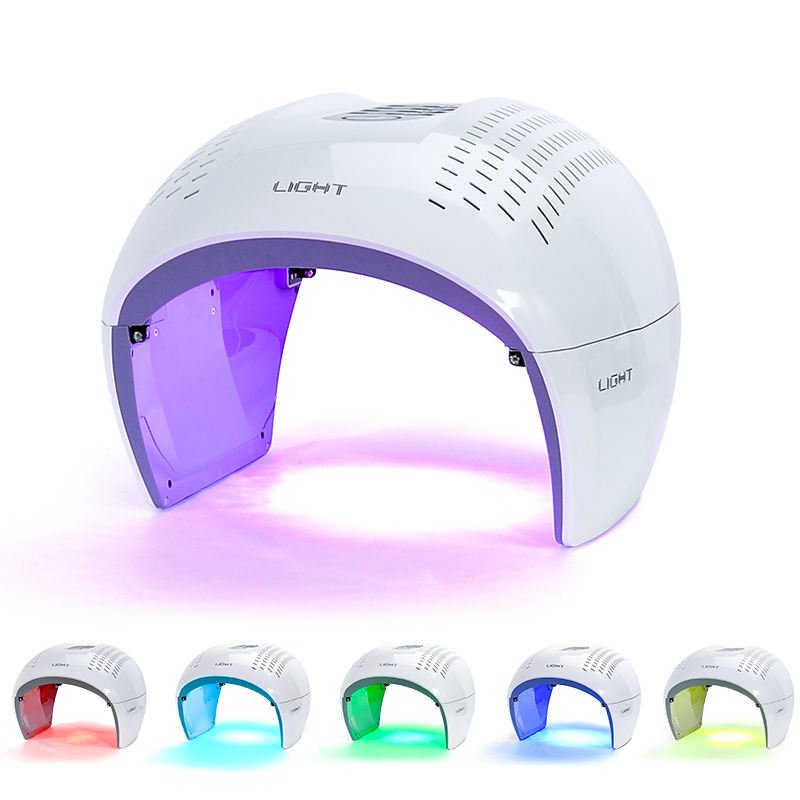


7-Color PDT LED Light Therapy Machine
The 7-Color PDT LED Light Therapy Machine is a professional LED phototherapy system designed for beauty salons, esthetic clinics, medspas and skincare professionals seeking a versatile, non-invasive light-based treatment platform.
Combining 625nm red light, 415nm blue light and 520nm green light with seven selectable single and combination modes, the system allows practitioners to customize LED treatments according to different skin-care objectives.
Instead of relying on a single wavelength, the 7-mode configuration gives professionals greater flexibility for skin rejuvenation, acne-prone skin care, oil-control programs, complexion refinement and post-facial care.
Its non-contact treatment design also makes LED phototherapy easy to integrate into existing facial protocols, including professional cleansing, hydrodermabrasion, microdermabrasion and other aesthetic skincare services.


Why Choose a 7-Color PDT LED Light Therapy Machine?
Professional LED phototherapy works by delivering controlled wavelengths of visible light to the skin. Different wavelengths interact with skin chromophores at different depths and are commonly selected according to the treatment objective. Professional LED systems on the market similarly combine multiple wavelengths and selectable treatment modes for customized facial protocols.
One Machine. Seven Treatment Modes.
Instead of purchasing separate devices for different light-based treatments, this system combines three core wavelengths into seven treatment configurations:
- Red Light
- Blue Light
- Green Light
- Red + Blue
- Red + Green
- Blue + Green
- Red + Blue + Green
This makes the machine suitable for building multiple LED facial treatment protocols from one professional platform.
Non-Invasive Treatment Technology
LED phototherapy is a non-ablative, non-invasive treatment approach that does not rely on needles, injections or aggressive resurfacing. This makes it particularly convenient as a standalone facial service or as an add-on treatment following other skincare procedures. Professional LED machines are commonly positioned around painless, low-downtime treatment experiences.
Designed for Professional Beauty Businesses
The system can be incorporated into treatment menus for:
Beauty Salons · Esthetic Clinics · Medspas · Dermatology Practices · Skincare Studios · Spa & Wellness Centers · Beauty Equipment Distributors

7 Light Therapy Modes
Mode 1 — 625nm Red Light
Primary focus: Skin Rejuvenation & Firmness
The 625nm red-light mode is designed for professional skin-rejuvenation protocols where the treatment objective is to support healthier-looking, smoother and more resilient skin.
Red light is commonly incorporated into aesthetic LED treatments focused on:
- Skin rejuvenation
- Fine-line appearance
- Skin firmness
- Elasticity support
- Dull or tired-looking skin
- Post-facial maintenance
The 625nm wavelength is also widely used in professional LED phototherapy systems targeting skin-rejuvenation applications.
Mode 2 — 415nm Blue Light
Primary focus: Acne-Prone Skin & Oil-Control Programs
Blue light provides a different treatment approach from red light and is commonly selected for acne-prone and oily skin protocols.
The 415nm mode can be incorporated into professional treatments designed to support:
- Acne-prone skin care
- Excess oil management
- Blemish-focused facial protocols
- Skin purification routines
- Calming skincare programs
Blue light around 415nm is widely used in professional LED systems for acne-focused treatments.
Mode 3 — 520nm Green Light
Primary focus: Complexion Balance & Skin-Calming Treatments
Green light provides a third spectral option for professionals who want to diversify their LED treatment protocols.
The 520nm mode can be incorporated into facial programs focused on:
- Uneven-looking complexion
- Skin balance
- Oily skin care
- Dull skin
- Calming facial protocols
- Overall complexion maintenance
The 520nm green wavelength is also used in professional LED systems designed around multi-spectrum facial treatments.
Mode 4 — 625nm Red + 415nm Blue
Rejuvenation + Acne-Prone Skin Care
Combining red and blue light creates a broader treatment protocol for clients who present with both skin-aging concerns and blemish-prone skin.
This combination can be integrated into facial programs targeting:
- Dull complexion
- Acne-prone skin
- Fine-line appearance
- Uneven skin texture
- General skin rejuvenation
The red/blue combination is a common configuration in professional LED phototherapy equipment.
Mode 5 — 625nm Red + 520nm Green
Rejuvenation + Complexion Balance
The red and green combination expands the treatment spectrum for clients requiring a more comprehensive facial-care protocol.
It can be used as part of treatments designed around:
- Skin rejuvenation
- Complexion refinement
- Dull-looking skin
- Skin texture improvement
- Oil-balance routines
- Calming skincare
Mode 6 — 415nm Blue + 520nm Green
Acne Care + Oil & Skin Balance
Blue and green light provide a complementary combination for oily or blemish-prone skin programs.
This mode can be incorporated into protocols focused on:
- Oily skin
- Acne-prone skin
- Complexion balance
- Skin-calming treatments
- Pore-focused facial routines
Mode 7 — 625nm Red + 415nm Blue + 520nm Green
Full-Spectrum Multi-Wavelength Facial Treatment
For the most comprehensive LED protocol, all three core wavelengths operate together.
This mode is ideal for professional facial programs addressing multiple appearance-related concerns at the same time, including:
- Skin rejuvenation
- Acne-prone skin
- Dull complexion
- Uneven-looking skin
- Fine-line appearance
- Skin texture
- Overall skin maintenance
The three-wavelength combination is particularly useful for salons that want to offer a customizable LED facial rather than a single-purpose light treatment.

Professional LED Phototherapy for Multiple Skin-Care Protocols
The biggest advantage of this system is not simply the number of colors. It is the ability to select different wavelength combinations according to the treatment objective.
Skin Rejuvenation
Red-light protocols can be incorporated into facial programs designed to improve the appearance of:
- Fine lines
- Loss of firmness
- Dullness
- Uneven texture
- Tired-looking skin
Acne-Prone Skin
Blue-light protocols are commonly used in professional acne-focused LED treatments, particularly for oily and blemish-prone skin.
Complexion & Skin Balance
Green-light protocols provide another option for customized facial treatments where the goal is a more balanced, refreshed appearance.
Post-Facial LED Treatment
LED therapy can be positioned as an additional step following conventional facial treatments, allowing salons to create a higher-value treatment package rather than selling LED as an isolated service.
This type of add-on positioning is particularly valuable commercially because professional LED systems are generally easy to integrate into broader facial-treatment menus. Competitor professional systems similarly position LED therapy as a salon and clinic service that can complement other skincare procedures.


How 7-Color LED Phototherapy Works
LED phototherapy uses specific wavelengths of visible light to deliver photon energy to the skin.
Different wavelengths interact with tissue differently, which is why professional systems use multiple wavelengths rather than relying on one color alone.
For this machine:
625nm Red Light
↓
Skin rejuvenation-focused protocols
415nm Blue Light
↓
Acne-prone and oil-control protocols
520nm Green Light
↓
Complexion balance and calming protocols
The seven selectable modes then allow these wavelengths to be used independently or in combination.
This multi-wavelength approach gives estheticians greater flexibility when designing individualized facial protocols.


PDT vs. LED Phototherapy: An Important Technical Distinction
The term PDT (Photodynamic Therapy) is widely used in the aesthetic equipment industry for LED-based skincare systems. However, technically, conventional photodynamic therapy can involve a photosensitizing agent that is activated by a specific wavelength of light.
Therefore, this machine should be described primarily as a professional LED phototherapy / LED light therapy system unless the specific treatment protocol and approved photosensitizer supplied with the device support a true photodynamic therapy indication.
This distinction is important for a professional B2B product page because it prevents exaggerated medical claims while still targeting the high-value “PDT LED light therapy machine” search term.
Key Features
7 Selectable Light Modes
Three core wavelengths are combined into seven treatment configurations, giving professionals greater flexibility for different facial protocols.
3 Core Wavelengths
625nm Red + 415nm Blue + 520nm Green
Non-Contact Treatment
The LED light source operates without direct mechanical contact with the skin, supporting hygienic professional treatment workflows.
Multi-Treatment Application
One system can support different LED facial protocols instead of being limited to one treatment objective.
Easy Integration
The treatment can be incorporated into existing facial menus and combined with professional skincare services.
Low-Consumable Treatment Model
Unlike procedures requiring disposable cartridges, needles or handpiece tips, LED phototherapy can provide a relatively simple treatment workflow with minimal consumable requirements.
Suitable for Professional Aesthetic Businesses
Designed for beauty professionals who want to add LED phototherapy to an existing treatment menu or build a dedicated LED facial service.
Recommended Professional Treatment Applications
| Treatment Application | Recommended Mode |
|---|---|
| Skin Rejuvenation | 625nm Red |
| Acne-Prone Skin Care | 415nm Blue |
| Oily Skin Care | 415nm Blue + 520nm Green |
| Complexion Balance | 520nm Green |
| Rejuvenation + Blemish Care | Red + Blue |
| Rejuvenation + Complexion Care | Red + Green |
| Comprehensive LED Facial | Red + Blue + Green |
Important: Treatment parameters such as session duration, irradiance, fluence and treatment frequency should be determined from the machine’s verified technical specifications, manufacturer protocol and the practitioner’s professional assessment. Do not publish treatment times or irradiance figures unless they have been confirmed for this exact model.
Who Is This LED Light Therapy Machine For?
Beauty Salons
Add a dedicated LED facial treatment or increase the value of existing facial packages.
Estheticians
Use multiple wavelengths to create more flexible skincare protocols for different client needs.
Medspas & Aesthetic Clinics
Position LED phototherapy as a non-invasive complementary treatment within a broader aesthetic treatment portfolio.
Dermatology & Skin Clinics
Use multi-wavelength LED technology as part of professionally supervised skincare protocols, subject to local regulations and permitted indications.
Beauty Equipment Distributors
A seven-mode professional LED system provides a commercially attractive product for distributors serving salons, spas and aesthetic clinics.
Turn LED Therapy Into a High-Value Facial Service
A major commercial advantage of LED therapy is its ability to work as both a standalone service and an add-on treatment.
For example:
Basic Facial → LED Upgrade
Hydrodermabrasion → LED Recovery & Rejuvenation
Microdermabrasion → LED Skin-Calming Protocol
Acne Facial → Blue LED Treatment
Anti-Aging Facial → Red LED Treatment
Premium Facial → Full 3-Wavelength LED Protocol
This gives salon owners multiple ways to build treatment packages without purchasing a separate machine for every skincare concern.
Professional LED competitors similarly emphasize easy operation, multiple spectral modes and integration into salon treatment menus.
Professional Workflow
Step 1 — Skin Assessment
Evaluate the client’s skin condition and identify the primary treatment objective.
Step 2 — Cleanse & Prepare
Thoroughly cleanse the skin and complete any appropriate preparation required by the selected facial protocol.
Step 3 — Select the LED Mode
Choose the appropriate wavelength or wavelength combination according to the treatment objective.
Step 4 — Position the LED System
Position the light source according to the manufacturer’s recommended treatment distance and operating instructions.
Step 5 — Perform LED Phototherapy
Run the treatment using the manufacturer’s validated parameters for intensity and treatment duration.
Step 6 — Complete the Facial Protocol
Finish with the appropriate professional skincare or post-treatment routine.
Step 7 — Document & Monitor
Record treatment parameters and monitor the client’s skin response to support consistent future sessions.
Why Salon Owners Choose Multi-Wavelength LED Therapy
One machine can support multiple treatment protocols.
Instead of offering only a generic “LED treatment,” professionals can build dedicated services around:
Red Light Rejuvenation
Blue Light Acne Care
Green Light Skin Balance
Red + Blue Clarifying Facial
Red + Green Rejuvenation Facial
Blue + Green Balance Facial
3-Wavelength Signature LED Facial
This creates more opportunities to package LED therapy with existing facial treatments.
Built for Professional Aesthetic Businesses
The 7-Color PDT LED Light Therapy Machine is more than a light source. It is a flexible treatment platform designed to help beauty businesses expand their professional facial menu with a modern, non-invasive technology.
With three core wavelengths and seven selectable modes, practitioners can build treatment protocols around different skin-care objectives while maintaining a straightforward workflow.
For salons, spas, estheticians, medspas and aesthetic clinics looking for a versatile LED phototherapy machine, this system provides a practical way to add multi-wavelength light therapy to a professional treatment menu.
Frequently Asked Questions
What is a 7-color PDT LED light therapy machine?
A 7-color PDT LED light therapy machine is a professional LED phototherapy system offering multiple light wavelengths and combinations for customized skincare treatments. This model uses 625nm red, 415nm blue and 520nm green light across seven selectable treatment modes.
What are the seven LED modes?
The seven modes are:
- 625nm Red
- 415nm Blue
- 520nm Green
- Red + Blue
- Red + Green
- Blue + Green
- Red + Blue + Green
What is 625nm red LED light used for?
625nm red light is commonly incorporated into professional LED skincare protocols focused on skin rejuvenation, firmness, elasticity and the appearance of fine lines.
What is 415nm blue LED light used for?
415nm blue light is commonly used in acne-focused LED protocols, particularly for blemish-prone and oily skin.
What is 520nm green LED light used for?
520nm green light can be incorporated into professional facial protocols focused on complexion balance, calming care and overall skin maintenance.
Is LED light therapy invasive?
No. LED phototherapy is generally considered a non-invasive, non-ablative treatment because it uses light rather than needles, injections or mechanical skin resurfacing.
Can LED therapy be combined with other facial treatments?
Yes. LED therapy can be incorporated into broader professional facial protocols, including cleansing, hydrodermabrasion and other non-invasive skincare treatments, provided the combined protocol is appropriate for the client and consistent with the device manufacturer’s instructions.
How often should LED light therapy be performed?
Treatment frequency should be based on the machine’s validated protocol, selected wavelength, irradiance, treatment objective and individual client assessment. SalonMachines should not publish a universal frequency until the exact device protocol is confirmed.
Is this machine suitable for salons and medspas?
Yes. Its multiple wavelength configurations make it particularly suitable for professional businesses that want to offer customizable LED facial treatments.
Is PDT the same as LED phototherapy?
Not necessarily. LED phototherapy uses specific wavelengths of light for photobiomodulation or cosmetic skincare applications. Conventional photodynamic therapy may additionally involve a photosensitizing substance activated by light. The exact terminology and indications should therefore follow the device’s intended use and applicable regulations.
Reviews
There are no reviews yet.