
Laser Tattoo Removal: How It Works, Side Effects, Benefits, Healing, Scarring, Cost & Equipment Guide
Share This Website
Summary
Laser tattoo removal has evolved into a cornerstone service for modern aesthetic clinics, combining high-margin treatment potential with strong and growing patient demand. For distributors, dermatologists, estheticians, and clinic owners, understanding both the clinical mechanism and equipment selection criteria is critical for delivering safe, effective, and profitable outcomes.
This guide provides a technical, practice-oriented breakdown—from laser physics to aftercare protocols and ROI considerations.
What Is Laser Tattoo Removal?
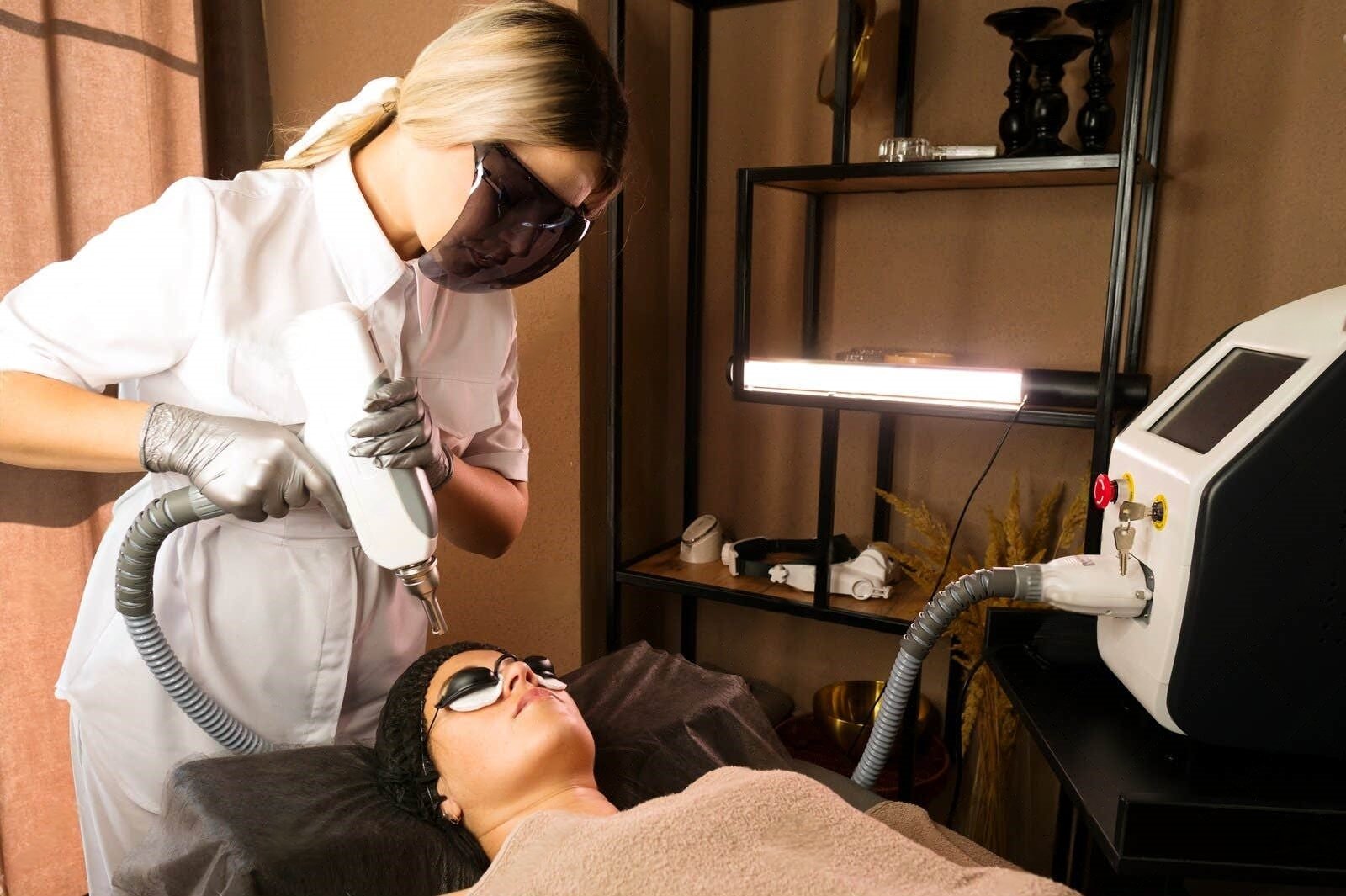
Laser tattoo removal is a non-invasive procedure that uses high-intensity, short-pulse laser energy to fragment tattoo ink particles within the dermis. These fragmented particles are then gradually cleared by the body’s lymphatic system.
Unlike older destructive methods (dermabrasion, excision), modern laser systems target pigment selectively, preserving surrounding tissue integrity.
How Does Laser Tattoo Removal Work?
Laser tattoo removal is based on selective photothermolysis, a principle widely used in medical laser applications.
- The laser emits energy at specific wavelengths
- Tattoo pigments absorb this energy
- Rapid thermal expansion causes ink particles to shatter into microscopic fragments
- The immune system removes these fragments over time
Key Technical Factors:
- Wavelength: Determines pigment targeting (e.g., 1064 nm for black ink)
- Pulse Duration: Nanosecond vs picosecond pulses impact fragmentation efficiency
- Fluence (Energy Density): Controls treatment intensity
Picosecond lasers are increasingly favored due to superior fragmentation and fewer sessions required.
What Are the Types of Laser Tattoo Removal Systems?
1. Q-Switched Lasers
- Nanosecond pulse duration
- Proven, cost-effective
- Suitable for most clinics entering the market
2. Picosecond Lasers
- Ultra-short pulse duration (trillionths of a second)
- Higher peak power, better ink shattering
- Faster clearance, especially for stubborn colors
3. Multi-Wavelength Platforms
- Combine 532nm, 755nm, and 1064nm
- Treat a broader spectrum of ink colors
Clinic Insight:
For scalable service offerings, multi-wavelength picosecond platforms deliver the highest versatility and patient satisfaction.
The Benefits of Laser Tattoo Removal
- Non-invasive with minimal downtime
- High patient demand and repeat sessions
- Suitable for multi-skin types (with proper calibration)
- Strong ROI for clinics due to session-based pricing
- Expands service portfolio for aesthetic practices
What Does Laser Tattoo Removal Treat?
- Professional and amateur tattoos
- Multicolor tattoos (with advanced systems)
- Cosmetic tattoos (eyebrows, lip liner)
- Pigmented lesions (in some devices with dual functionality)
Who Should Get Laser Tattoo Removal?
Ideal Candidates:
- Individuals seeking partial or complete tattoo removal
- Patients preparing for cover-up tattoos
- Clients with pigment regret or outdated designs
Caution Required For:
- Darker skin types (higher risk of pigmentation changes)
- Patients with keloid history
- Active skin infections in treatment area
Are There Any Risks Associated with Laser Tattoo Removal?
Yes—though generally low when performed correctly.
Common Side Effects:
- Redness and swelling
- Blistering
- Temporary hyperpigmentation or hypopigmentation
Rare Complications:
- Scarring
- Infection
- Textural skin changes
Proper device calibration and operator training significantly reduce these risks.
How to Avoid Scars from Laser Tattoo Removal
Scarring is preventable in most cases with correct protocols:
- Use appropriate fluence for skin type (Fitzpatrick scale)
- Avoid overtreatment in a single session
- Maintain adequate intervals between sessions (6–8 weeks)
- Follow strict aftercare protocols
- Use cooling systems to reduce thermal damage
What Is the Process of a Laser Tattoo Removal Procedure?
- Consultation & Skin Assessment
- Test Spot (if necessary)
- Laser Parameter Selection
- Treatment Session (10–30 minutes)
- Immediate Cooling & Dressing
- Scheduled Follow-Up Sessions
Multiple sessions (typically 5–10+) are required depending on tattoo depth, color, and age.
Laser Tattoo Removal Aftercare
Aftercare is a decisive factor in outcomes:
- Keep area clean and dry
- Avoid sun exposure (use SPF 50+)
- Do not pick scabs or blisters
- Apply healing ointments as directed
- Avoid heat, saunas, and intense exercise for 48 hours
How Much Does Laser Tattoo Removal Cost?
For Patients (U.S. Market):
- Small tattoo: $100–$300 per session
- Medium tattoo: $300–$700 per session
- Large tattoo: $800+ per session
For Clinics (Investment Perspective):
- Entry-level Q-switched systems: $3,000–$8,000
- Advanced picosecond systems: $20,000–$80,000+
ROI Insight:
Clinics typically achieve payback within 3–6 months with consistent patient flow.
How Can I Find Professional Laser Tattoo Removal Equipment for My Clinic?
For distributors and clinic owners, equipment selection directly impacts clinical outcomes and business performance.
Key Buying Criteria:
- Multi-wavelength capability (532nm / 755nm / 1064nm)
- Adjustable pulse duration (preferably picosecond)
- Stable energy output and cooling system
- FDA/CE certification
- After-sales support and training
Strategic Tip:
Partnering with specialized suppliers like SalonMachines or SkinTechX ensures access to professional-grade devices tailored for clinic-scale operations.
Takeaways
Laser tattoo removal represents a high-demand, high-margin treatment category for modern aesthetic businesses. Success depends on:
- Understanding laser-tissue interaction principles
- Selecting the right technology (picosecond vs Q-switched)
- Implementing strict treatment and aftercare protocols
- Investing in reliable, clinic-grade equipment
For distributors and clinic owners, aligning clinical efficacy with equipment quality is the fastest path to building authority, trust, and long-term revenue in the aesthetic market.