
Intense Pulsed Light (IPL) Therapy: A Complete Professional Guide to How IPL Works, Benefits, Treatments & Choosing the Right IPL Machine
Share This Website
Summary
Intense Pulsed Light (IPL) therapy has become one of the most widely used technologies in modern aesthetic clinics, medical spas, and professional beauty centers. Unlike traditional laser treatments that use a single wavelength of light, IPL uses a broad spectrum of controlled light energy to target multiple skin concerns, including pigmentation, vascular lesions, unwanted hair, acne-related issues, and overall skin rejuvenation.
For beauty professionals, clinic owners, and equipment distributors, IPL technology represents a valuable multi-functional platform that can expand treatment offerings, improve customer retention, and create additional revenue opportunities.
Understanding how IPL works, what conditions it can treat, and how to select a professional IPL machine is essential before investing in this technology.
What Is Intense Pulsed Light (IPL) Therapy?
Intense Pulsed Light (IPL) therapy is a non-invasive aesthetic treatment that uses high-intensity pulses of broad-spectrum light energy to improve various skin conditions.
Although IPL is often compared with laser technology, it is not technically a laser treatment. A laser device produces a concentrated beam of light at one specific wavelength, while an IPL system emits multiple wavelengths across a broader range, typically between 400 nm and 1200 nm.
This broad wavelength range allows IPL devices to target different chromophores in the skin, including:
- Melanin – responsible for pigmentation and dark spots
- Hemoglobin – found in blood vessels and vascular lesions
- Water molecules – involved in tissue heating and collagen stimulation
Because IPL can address multiple aesthetic concerns with one platform, it has become a popular choice for:
- Medical aesthetic clinics
- Dermatology practices
- Beauty salons
- Spas
- Skin rejuvenation centers
Modern professional IPL machines often combine multiple treatment functions, including:
- IPL skin rejuvenation
- IPL hair reduction
- Pigmentation removal
- Vascular treatment
- Acne improvement
- Skin tone enhancement
How Does Intense Pulsed Light Work?
The Science Behind IPL Technology
The effectiveness of IPL therapy is based on the principle of selective photothermolysis.
Selective photothermolysis means that specific light wavelengths are absorbed by targeted structures in the skin and converted into heat energy while minimizing damage to surrounding tissues.
The process involves three main steps:
1. Light Energy Delivery
During treatment, the IPL handpiece releases controlled pulses of intense light onto the skin surface.
The energy penetrates through the epidermis and reaches targeted structures beneath the skin.
2. Target Absorption
Different tissues absorb different wavelengths of light.
For example:
Melanin Absorption
Pigmented areas such as:
- Sun spots
- Age spots
- Freckles
- Uneven pigmentation
absorb specific IPL wavelengths.
The absorbed energy converts into heat, breaking down unwanted pigment particles, which are naturally eliminated by the body’s immune system.
Hemoglobin Absorption
Blood vessels contain hemoglobin, which absorbs IPL energy.
This allows IPL treatments to improve:
- Facial redness
- Spider veins
- Broken capillaries
- Rosacea-related vascular appearance
Hair Follicle Targeting
For hair reduction treatments, IPL energy is absorbed by melanin in the hair follicle.
The generated heat damages the follicle’s ability to produce hair, resulting in progressive hair reduction after multiple sessions.
3. Controlled Thermal Response
Professional IPL systems use advanced cooling technologies to maintain patient comfort and protect the epidermis.
Common cooling systems include:
- Sapphire contact cooling
- Water cooling
- Air cooling
- Integrated temperature monitoring
Effective cooling is one of the most important differences between professional IPL equipment and lower-quality systems.
IPL vs Laser: What Is the Difference?
Many people confuse IPL with laser treatments because both use light energy. However, their technologies are different.
| Feature | IPL Technology | Laser Technology |
|---|---|---|
| Light source | Broad-spectrum light | Single wavelength |
| Energy delivery | Multiple wavelengths | Specific wavelength |
| Treatment versatility | Multiple applications | Usually specialized |
| Skin concerns | Pigmentation, vessels, hair, rejuvenation | Depends on laser type |
| Equipment cost | Generally more flexible | Often higher investment |
| Treatment customization | Filter-based adjustment | Wavelength-specific |
For many aesthetic clinics, IPL provides an excellent balance between versatility and investment because one device can perform multiple popular treatments.
Benefits of Intense Pulsed Light Therapy
1. Improves Skin Tone and Texture
IPL is widely used for overall skin rejuvenation.
It can help improve:
- Uneven skin tone
- Dull complexion
- Rough texture
- Enlarged pores
- Early signs of aging
By stimulating collagen remodeling, IPL treatments can gradually improve skin quality.
2. Reduces Pigmentation Problems
One of the most common applications of IPL is pigmentation correction.
IPL may help treat:
- Sun damage
- Age spots
- Freckles
- Brown patches
- Uneven pigmentation
The light energy targets excess melanin while leaving surrounding skin minimally affected.
3. Treats Vascular Skin Concerns
IPL is frequently used in aesthetic clinics for vascular improvement.
Applications include:
- Facial redness
- Broken capillaries
- Spider veins
- Rosacea-related redness
The energy targets blood vessels, causing controlled thermal damage that encourages gradual clearance.
4. Provides Long-Term Hair Reduction
IPL hair removal is a popular revenue-generating treatment for salons and spas.
It works best on:
- Dark hair
- Coarse hair
- Areas with higher melanin concentration
Common treatment areas:
- Legs
- Arms
- Underarms
- Bikini area
- Facial hair
Multiple treatments are usually required because hair grows through different cycles.
5. Supports Anti-Aging Treatments
IPL can stimulate natural skin renewal processes.
Many professional clinics use IPL as part of anti-aging programs because it may support:
- Collagen production
- Skin firmness
- Improved elasticity
- Smoother appearance
What Does IPL Treat?
Professional IPL machines are highly versatile and can be used for many aesthetic applications.
Pigmentation Treatments
IPL is commonly used for:
- Solar lentigines
- Age spots
- Freckles
- Hyperpigmentation
- Uneven skin tone
Vascular Treatments
IPL may improve:
- Facial flushing
- Telangiectasia
- Broken capillaries
- Mild vascular lesions
Hair Reduction Treatments
Professional IPL hair removal systems are used for:
- Facial hair
- Body hair
- Long-term hair reduction programs
Skin Rejuvenation
IPL photofacial treatments are designed to improve:
- Skin brightness
- Texture
- Fine lines
- Overall appearance
Who Is a Good Candidate for IPL Treatment?
IPL can be suitable for many patients, but professional assessment is essential.
Ideal candidates often include individuals with:
- Sun-damaged skin
- Uneven pigmentation
- Facial redness
- Early signs of aging
- Unwanted hair
However, treatment suitability depends on:
- Skin type
- Hair color
- Treatment goal
- Medical history
- Current medications
Professional practitioners usually evaluate patients using:
- Fitzpatrick skin type classification
- Skin condition assessment
- Treatment history
Darker skin types require careful parameter selection because higher melanin levels may increase the risk of unwanted pigmentation changes.
What Happens During an IPL Treatment?
A professional IPL session usually follows several steps.
Step 1: Consultation and Skin Assessment
The practitioner evaluates:
- Skin concerns
- Treatment goals
- Skin type
- Contraindications
Step 2: Skin Preparation
Before treatment:
- Skin is cleansed
- Makeup and skincare products are removed
- Protective eyewear is provided
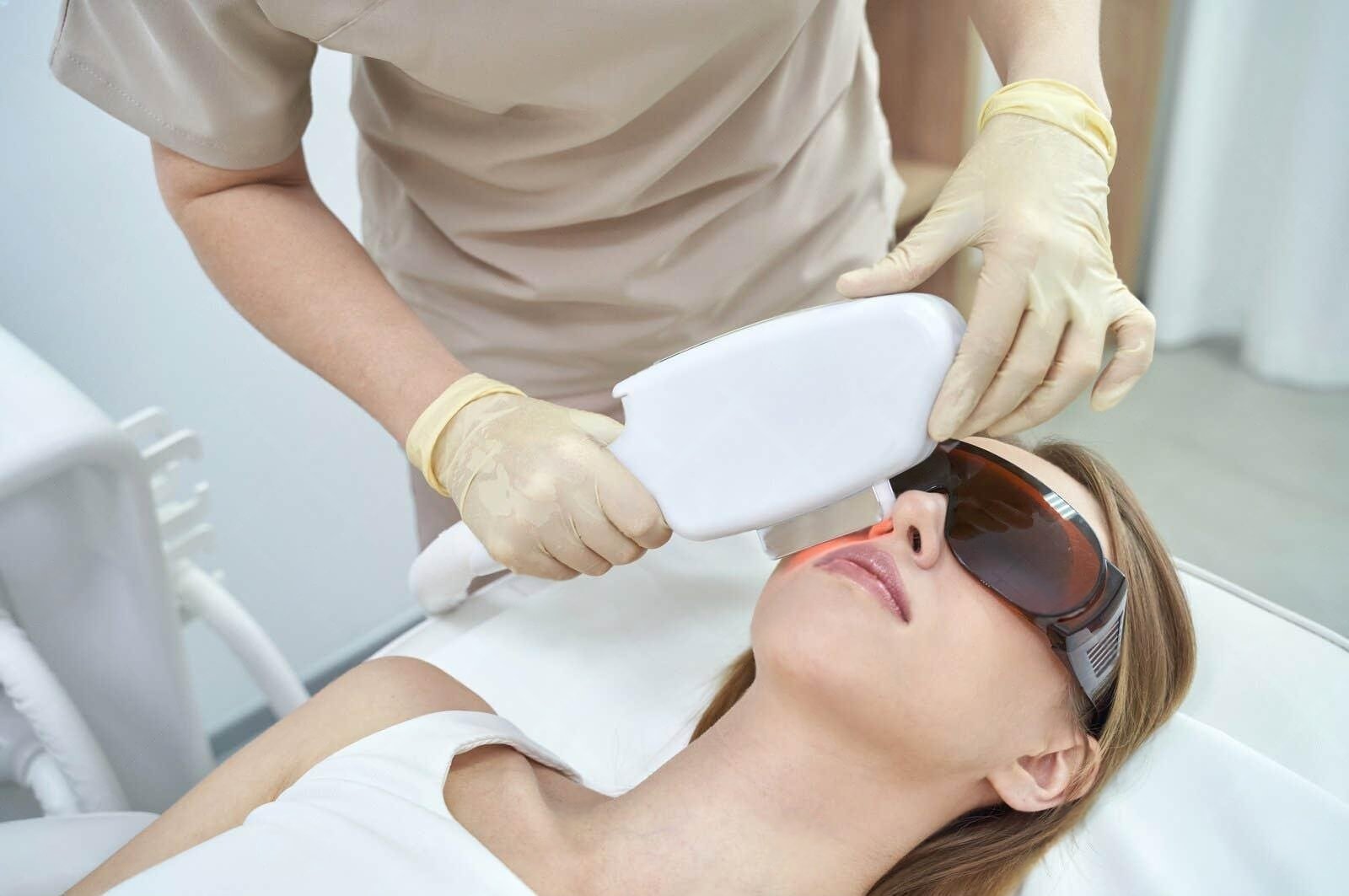
Step 3: IPL Energy Application
The IPL handpiece is placed against the skin.
Controlled light pulses are delivered to the treatment area.
Patients commonly describe the sensation as:
- Mild snapping feeling
- Warm pulses
- Similar to a small rubber band sensation
Step 4: Post-Treatment Care
After treatment, practitioners provide instructions regarding:
- Sun protection
- Skincare products
- Temporary sensitivity management
IPL Recovery and Aftercare Guide
IPL usually requires minimal downtime compared with more invasive procedures.
Common temporary reactions include:
- Mild redness
- Slight swelling
- Warm sensation
- Darkening of pigmentation spots before fading
Professional aftercare recommendations include:
Avoid Excess Sun Exposure
UV exposure can increase pigmentation risks.
Use:
- Broad-spectrum sunscreen
- Protective clothing
Avoid Strong Active Ingredients
Immediately after treatment, avoid excessive use of:
- Retinol
- Strong acids
- Harsh exfoliants
Follow Professional Recommendations
Proper aftercare improves safety and treatment outcomes.
How Much Does IPL Therapy Cost?
IPL treatment pricing varies depending on:
- Geographic location
- Clinic positioning
- Treatment area
- Equipment quality
- Practitioner experience
Typical consumer treatment prices may range from:
- Small facial areas: around $100–$300 per session
- Full facial IPL treatments: around $300–$600 per session
- Larger body treatments: higher depending on size
For clinic owners, IPL equipment represents a business investment.
A professional IPL machine can generate revenue through multiple services:
- Photofacial treatments
- Hair reduction packages
- Pigmentation programs
- Anti-aging treatments
A multi-functional IPL platform can often provide better ROI than purchasing several single-purpose devices.
Does IPL Treatment Hurt?
Most patients tolerate IPL treatment well.
The sensation depends on:
- Energy settings
- Treatment area
- Individual sensitivity
- Cooling technology
Professional IPL machines with advanced cooling systems significantly improve comfort.
Many patients describe IPL as:
- Warm flashes
- Small snapping sensations
- Mild heat
Are There Risks Associated With IPL?
When performed correctly by trained professionals, IPL is considered a safe aesthetic technology.
Possible temporary side effects include:
- Redness
- Swelling
- Sensitivity
- Temporary pigmentation changes
Potential risks increase when:
- Incorrect energy settings are used
- Skin type is not properly assessed
- Low-quality equipment is used
- Operator training is insufficient
Professional clinics should prioritize:
- Certified equipment
- Proper training
- Patient screening
- Correct parameter selection
Professional IPL Machine vs Home IPL Device
| Feature | Professional IPL Machine | Home IPL Device |
|---|---|---|
| Energy output | High-power professional level | Lower output |
| Treatment speed | Faster | Slower |
| Cooling system | Advanced cooling | Limited cooling |
| Applications | Multiple clinical treatments | Mainly hair reduction |
| Parameter adjustment | Professional customization | Limited settings |
| Suitable users | Clinics and salons | Individual consumers |
Home IPL devices are designed for personal maintenance, while professional IPL machines are built for repeated treatments, higher efficiency, and commercial applications.
Salonmachines Expert Guide: How to Choose the Right Professional IPL Machine
Choosing the correct IPL machine is one of the most important decisions for a beauty clinic or aesthetic business.
1. Check Treatment Versatility
A high-value IPL system should support multiple applications:
- Skin rejuvenation
- Hair removal
- Pigmentation treatment
- Vascular treatment
Multi-functional equipment improves business flexibility.
2. Evaluate Energy Parameters
Important specifications include:
- Fluence range
- Pulse duration
- Spot size
- Wavelength filters
Professional adjustment capability allows practitioners to customize treatments.
3. Cooling Technology Matters
A reliable cooling system improves:
- Patient comfort
- Treatment safety
- Operator confidence
4. Consider Equipment Reliability
Before purchasing, evaluate:
- Manufacturer reputation
- Warranty support
- Spare parts availability
- Technical training
5. Analyze Business ROI
A professional IPL machine should not only perform treatments but also create business opportunities.
Consider:
- Average treatment price
- Customer demand
- Treatment packages
- Maintenance costs
Frequently Asked Questions About Intense Pulsed Light (IPL)
1. How does intense pulsed light work?
2. Is IPL better than laser treatment?
3. How many IPL sessions are needed?
4. How long do IPL results last?
5. Can IPL remove wrinkles?
6. Is IPL safe for all skin types?
7. What should I avoid after IPL treatment?
8. What should clinics consider before buying an IPL machine?
Key Takeaways
Intense Pulsed Light (IPL) therapy remains one of the most versatile technologies in the aesthetic equipment market.
Its ability to address pigmentation, vascular concerns, hair reduction, and skin rejuvenation makes IPL a valuable investment for modern beauty clinics, medical spas, and aesthetic professionals.
For business owners selecting an IPL machine, the most important factors are not only the device price but also:
- Treatment versatility
- Safety features
- Technology reliability
- Patient experience
- Long-term ROI potential
A professionally designed IPL system can become a powerful revenue-generating platform while helping clinics provide advanced non-invasive aesthetic treatments.
Explore professional IPL machines from Salonmachines and find the right aesthetic technology solution for your clinic, spa, or beauty business.