
Body Sculpting Machines: Benefits, Risks, Recovery, Cost & Professional Treatment Guide for Clinics and Med Spas
Share This Website
The demand for noninvasive body contouring treatments has fundamentally changed the modern aesthetic industry. What was once a niche luxury service has evolved into one of the fastest-growing profit centers for med spas, wellness clinics, aesthetic practices, and beauty centers worldwide.
Patients increasingly want visible body contouring results without surgery, anesthesia, or extended downtime. At the same time, clinic owners are searching for scalable treatment categories with high repeat revenue, strong treatment margins, and broad demographic appeal. Body sculpting machines sit directly at the intersection of those two market forces.
Yet the term “body sculpting machine” now encompasses a wide range of technologies — from cryolipolysis fat freezing systems and HIFEM muscle stimulation platforms to RF skin tightening devices, cavitation machines, and multi-functional contouring systems.
For clinic buyers, the challenge is no longer whether body contouring is profitable. The real challenge is understanding:
- which technology fits the clinic model,
- which devices produce clinically meaningful outcomes,
- how treatment safety varies,
- what realistic patient expectations look like,
- and which systems generate sustainable ROI rather than short-term hype.
This guide examines the science, business considerations, treatment workflows, costs, benefits, risks, and technology categories behind modern body sculpting machines in 2026.
What Is a Body Sculpting Machine?
A body sculpting machine is a noninvasive or minimally invasive aesthetic device designed to reduce localized fat deposits, improve body contours, tighten skin, stimulate muscle activity, or enhance lymphatic drainage without traditional liposuction surgery.
Modern body contouring devices are commonly used on areas such as:
- abdomen
- flanks (“love handles”)
- thighs
- buttocks
- upper arms
- back rolls
- chin and jawline
Unlike surgical liposuction, nonsurgical body sculpting technologies typically rely on controlled thermal, electromagnetic, ultrasonic, or mechanical energy to alter fat cells and surrounding tissues.
Professional systems used in clinics often combine multiple technologies into one platform to address several concerns simultaneously, including:
- fat reduction
- cellulite improvement
- skin laxity
- muscle toning
- circulation enhancement
- post-treatment recovery
The category has expanded dramatically because patients increasingly prefer treatments with:
- minimal downtime,
- lower procedural risk,
- gradual natural-looking results,
- and less psychological resistance than surgery.
How Does a Body Sculpting Machine Work?
Body sculpting technologies work through different physiological mechanisms depending on the energy modality being used.
Most professional systems target one or more of the following biological responses:
| Mechanism | Primary Effect |
|---|---|
| Adipocyte destruction | Reduces fat cells |
| Thermal collagen remodeling | Tightens skin |
| Muscle supramaximal contraction | Builds or tones muscle |
| Lymphatic stimulation | Improves fluid drainage |
| Microcirculation enhancement | Supports metabolism and tissue recovery |
Some technologies permanently destroy fat cells through apoptosis, while others temporarily shrink fat cells or stimulate metabolic clearance pathways.
The most effective professional treatment protocols often combine:
- fat reduction,
- skin tightening,
- and lymphatic support
rather than relying on a single mechanism alone.
This is one reason multi-technology platforms have become increasingly popular among med spas and aesthetic clinics.
Understanding Nonsurgical Body Sculpting Technologies
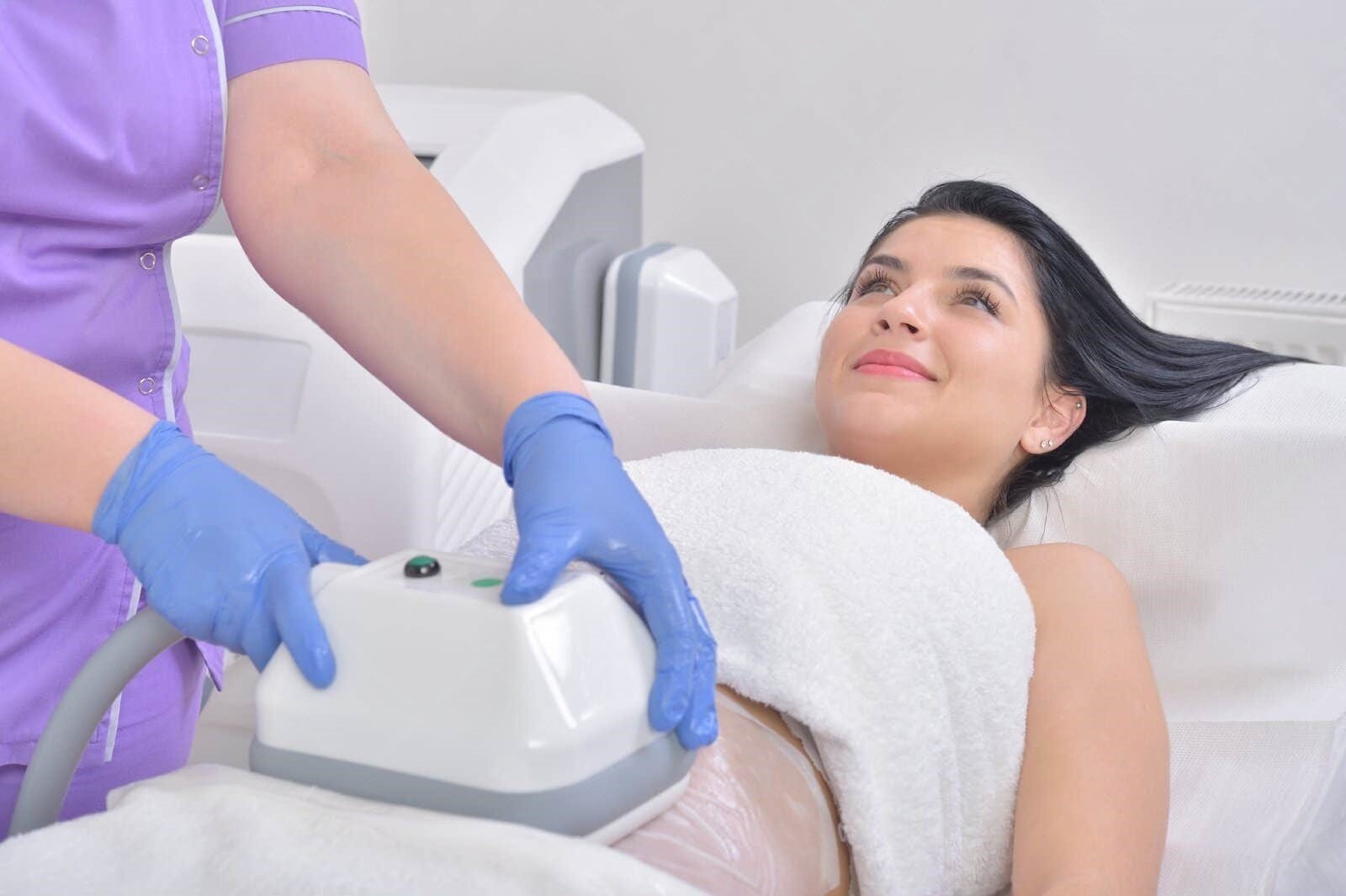
1) Cryolipolysis (Fat Freezing) Machine
Cryolipolysis uses controlled cooling to induce apoptosis in fat cells without damaging surrounding tissue.
Fat cells are particularly vulnerable to cold exposure because adipocytes crystallize at higher temperatures than water-rich surrounding tissues. During treatment, applicators cool targeted fat layers to temperatures capable of triggering gradual fat cell death.
Over the following weeks, the lymphatic system naturally clears damaged adipocytes from the body.
Common Treatment Areas
- abdomen
- flanks
- thighs
- bra fat
- double chin
Clinical Advantages
- no surgery
- no anesthesia
- predictable fat reduction
- high patient awareness and market demand
Limitations
Cryolipolysis primarily targets fat reduction rather than skin tightening. Patients with significant skin laxity may require combination therapies.
Best Candidates
Ideal patients are close to their target weight but struggle with stubborn localized fat deposits resistant to diet and exercise.
2) EMS / HIFEM (Electromagnetic Muscle Stimulation)
High-Intensity Focused Electromagnetic technology stimulates supramaximal muscle contractions far beyond what voluntary exercise can achieve.
These intense contractions trigger:
- muscle hypertrophy,
- muscle strengthening,
- and secondary fat metabolism effects.
The technology became highly popular because it introduced a new category: body contouring through muscle remodeling rather than purely fat destruction.
Common Treatment Areas
- abdomen
- buttocks
- thighs
- arms
Why Clinics Like HIFEM Systems
HIFEM treatments often create visible improvements relatively quickly, making them highly marketable on social media and consultation presentations.
Clinical Considerations
Patients with metal implants, pacemakers, or certain medical conditions may not qualify for treatment.
3) Radiofrequency (RF)
Radiofrequency body contouring devices deliver controlled heat into dermal and subcutaneous tissue layers.
The heat stimulates:
- collagen remodeling,
- tissue tightening,
- circulation,
- and mild adipose reduction.
RF systems are especially valuable because many body contouring patients also present with skin laxity after weight fluctuations, aging, or pregnancy.
Advantages of RF Technology
- skin tightening benefits
- cellulite improvement
- comfortable treatments
- minimal downtime
- suitable for multiple skin types
Common RF Applications
- abdomen tightening
- post-weight-loss skin laxity
- cellulite reduction
- postpartum contouring
Modern platforms frequently combine RF with vacuum therapy, EMS, or cavitation for enhanced outcomes.
4) Ultrasound Cavitation
Ultrasound cavitation uses low-frequency ultrasonic waves to disrupt adipocyte membranes.
The treatment creates microscopic pressure changes within fat tissue, which may contribute to fat cell breakdown and metabolic clearance.
Cavitation remains popular globally because it is:
- affordable,
- easy to integrate into spas,
- and attractive to entry-level clinics.
Benefits
- lower equipment investment
- broad treatment versatility
- comfortable sessions
- strong package-sale potential
Important Reality Check
Results from cavitation tend to be more gradual and variable than higher-end medical body contouring technologies.
Patient selection and treatment consistency strongly influence outcomes.
5) Laser Lipolysis (Laser Lipo)
Laser lipolysis systems use low-level or diode laser energy to target adipose tissue.
These devices are commonly marketed for:
- inch loss,
- waistline reduction,
- and body slimming.
Some systems rely on photobiomodulation concepts that temporarily alter adipocyte permeability.
Why Clinics Add Laser Lipo
Laser lipolysis devices are often used as:
- complementary slimming services,
- package add-ons,
- or combination therapies alongside RF and EMS systems.
Commercial Advantage
Laser lipo treatments are generally easy to sell in multi-session packages due to their comfortable treatment experience.
6) High-Intensity Focused Ultrasound (HIFU)
HIFU body contouring systems use focused ultrasound energy to create thermal coagulation points within deeper tissue layers.
The technology is used for:
- fat reduction,
- tissue tightening,
- and collagen stimulation.
Unlike surface heating technologies, HIFU can target deeper structural layers with greater precision.
Popular Treatment Areas
- abdomen
- thighs
- arms
- lower face
- jawline
Clinical Strength
HIFU is particularly attractive for patients seeking simultaneous tightening and contouring.
7) Vacuum / Mechanical Body Shaping
Vacuum-assisted body contouring systems mechanically manipulate tissue through suction, rolling, or compression.
These treatments are often used for:
- cellulite reduction,
- circulation enhancement,
- lymphatic movement,
- and skin smoothing.
Why Combination Therapy Matters
Vacuum systems alone may provide limited fat reduction, but they become highly effective when integrated with:
- RF,
- cavitation,
- or lymphatic drainage protocols.
8) Lymphatic Massager Machine
Lymphatic drainage technology has become increasingly important in modern body contouring workflows.
These systems help support:
- fluid movement,
- detoxification pathways,
- circulation,
- and post-treatment recovery.
Many clinics now include lymphatic support after:
- cryolipolysis,
- laser lipo,
- cavitation,
- or postoperative recovery treatments.
Why This Matters Clinically
Improved lymphatic circulation may help reduce:
- temporary swelling,
- fluid retention,
- and treatment-related discomfort.
It also enhances the overall treatment experience, which contributes significantly to patient satisfaction and repeat bookings.
Professional Body Sculpting Machines vs. At-Home Body Sculpting Machines
One of the largest misconceptions in the market is the assumption that consumer-grade body contouring devices perform similarly to professional clinic systems.
They do not.
Professional devices operate with:
- higher energy output,
- larger treatment applicators,
- advanced cooling systems,
- precision calibration,
- and clinically engineered treatment protocols.
Consumer devices are intentionally limited for safety reasons.
Key Differences
| Professional Systems | At-Home Devices |
| Higher treatment intensity | Lower power output |
| Faster visible results | Mild gradual effects |
| Multi-technology platforms | Single-function devices |
| Clinically supervised | Self-administered |
| Better ROI potential | Consumer convenience |
At-home devices may help maintain results, but they rarely replace professional body contouring treatments.
Benefits of Body Sculpting Machines
1. Noninvasive Fat Reduction
Patients can target stubborn fat without surgical liposuction.
2. Minimal Downtime
Most treatments allow patients to return to normal activities immediately.
3. Expanded Clinic Revenue
Body contouring creates high-margin recurring treatment packages.
4. Strong Cross-Selling Potential
Clinics often combine body sculpting with:
- skin tightening,
- facial rejuvenation,
- weight management,
- wellness programs,
- and lymphatic drainage.
5. Broad Patient Demographic
Body contouring appeals to:
- postpartum patients,
- fitness-conscious consumers,
- aging populations,
- and post-weight-loss patients.
6. Growing Global Demand
The body contouring market continues expanding due to increased consumer interest in aesthetic wellness and preventative cosmetic treatments.
Risks, Side Effects & Safety Considerations
Although nonsurgical body sculpting is generally safer than surgery, professional consultation and proper patient selection remain critical.
Common Temporary Side Effects
- redness
- swelling
- tenderness
- bruising
- numbness
- temporary muscle soreness
Contraindications May Include
- pregnancy
- pacemakers
- metal implants
- severe skin conditions
- uncontrolled medical disorders
- active infections
Why Training Matters
Poor operator technique remains one of the biggest causes of inconsistent outcomes.
Clinics should prioritize:
- manufacturer training,
- treatment protocols,
- patient documentation,
- and contraindication screening.
Recovery & Downtime Expectations
Most nonsurgical body sculpting treatments require little to no downtime.
However, recovery experiences vary by technology.
| Technology | Typical Downtime |
| Cryolipolysis | Mild soreness or numbness |
| EMS/HIFEM | Muscle fatigue |
| RF | Minimal redness |
| Cavitation | Usually none |
| HIFU | Mild tenderness |
| Vacuum Therapy | Temporary redness |
Patients typically resume:
- work,
- exercise,
- and social activities
within the same day or next day.
How Much Does a Body Sculpting Machine Cost?
Professional Equipment Pricing
Pricing varies dramatically depending on technology, manufacturer reputation, certifications, and treatment capabilities.
Approximate Price Ranges
| Technology | Estimated Price Range |
| Cavitation Machines | $500–$5,000 |
| RF Body Contouring Systems | $2,000–$20,000 |
| Cryolipolysis Machines | $3,000–$30,000+ |
| HIFEM Systems | $10,000–$100,000+ |
| Multi-Function Platforms | $5,000–$50,000+ |
Additional Cost Factors
Clinics should also consider:
- consumables,
- maintenance,
- applicator lifespan,
- warranty support,
- training,
- and software updates.
The cheapest machine is rarely the most profitable long-term investment.
Business ROI: Why Clinics Invest in Body Sculpting Machines
Body contouring remains one of the most commercially attractive aesthetic categories because treatments are:
- repeatable,
- package-based,
- and highly visual.
Revenue Advantages
High Package Conversion
Many patients purchase:
- 6-session,
- 8-session,
- or 12-session programs.
Cross-Service Upselling
Body sculpting patients frequently convert into:
- skin tightening patients,
- facial aesthetics patients,
- and wellness program clients.
Social Media Appeal
Before-and-after body transformations generate strong visual marketing opportunities.
Lower Staffing Complexity
Many body contouring procedures are less technically demanding than injectable treatments.
How to Choose the Best Body Sculpting Machine
Buying decisions should never rely solely on price.
Professional buyers should evaluate:
1. Technology Fit
Choose technologies aligned with clinic demographics and treatment goals.
2. Clinical Evidence
Look for real treatment data, user case studies, and engineering reliability.
3. Manufacturer Support
Reliable after-sales support is essential.
4. Multi-Functionality
Combination platforms often improve ROI by expanding service offerings.
5. Patient Demand
Study local treatment trends and competitive positioning.
6. Operator Training
A powerful machine without proper training often produces weak results.
7. Treatment Scalability
Consider whether the system supports:
- package sales,
- high patient volume,
- and future clinic expansion.
Treatment Workflow in a Professional Clinic
Consultation
Clinicians assess:
- body composition,
- treatment goals,
- contraindications,
- and lifestyle factors.
Customized Protocol Planning
Different technologies may be combined depending on patient needs.
Treatment Sessions
Most body contouring protocols require multiple sessions for optimal results.
Follow-Up & Progress Monitoring
Photography and circumference measurements help document outcomes.
Maintenance Treatments
Some patients benefit from ongoing maintenance sessions every few months.
Ideal Candidates for Body Sculpting
Body contouring is not a substitute for major weight loss.
The best candidates are typically:
- near their target weight,
- committed to healthy lifestyle habits,
- and seeking contour refinement rather than obesity treatment.
Patients with realistic expectations usually report higher satisfaction.
Who Should Avoid Body Sculpting Treatments?
Not every patient qualifies for nonsurgical body contouring.
Treatments may not be suitable for individuals with:
- severe obesity,
- uncontrolled metabolic conditions,
- implanted electronic devices,
- active infections,
- or unrealistic expectations.
A thorough consultation process is essential for safe treatment planning.
Why Multi-Technology Platforms Are Dominating the Industry
The industry has shifted rapidly toward multifunctional body contouring systems.
Clinics increasingly prefer devices that combine:
- RF,
- cavitation,
- vacuum therapy,
- EMS,
- and lymphatic technologies
within one platform.
Why This Trend Matters
Multi-function systems improve:
- treatment customization,
- package pricing,
- room utilization,
- and return on investment.
They also reduce dependence on a single treatment trend.
Enhance Your Esthetician Services with SalonMachines
For clinics, med spas, distributors, and beauty professionals entering the body contouring market, equipment selection directly impacts treatment quality, patient retention, and long-term profitability.
SalonMachines provides professional aesthetic equipment designed for modern body contouring businesses seeking scalable service expansion.
Professional buyers increasingly prioritize:
- multifunction platforms,
- operator-friendly workflows,
- stable system performance,
- and versatile treatment capabilities.
Whether the goal is adding cavitation services, expanding RF body tightening treatments, integrating EMS muscle stimulation, or creating complete noninvasive body contouring programs, choosing adaptable equipment is critical in today’s competitive aesthetic landscape.
The most successful clinics rarely build their business around a single trend. They build treatment ecosystems capable of evolving with patient demand.
Key Takeaways
- Body sculpting machines are now a core category within modern aesthetic medicine and med spa services.
- Different technologies target fat reduction, muscle stimulation, skin tightening, or lymphatic enhancement through different biological mechanisms.
- Multifunction platforms are becoming increasingly dominant because they improve treatment flexibility and clinic ROI.
- Patient selection, operator training, and realistic expectations significantly influence outcomes.
- The best body contouring investment is not necessarily the cheapest machine, but the system that aligns with long-term clinic strategy and patient demand.
- As consumer demand for noninvasive aesthetic treatments continues to rise globally, body sculpting technologies remain one of the strongest growth opportunities for clinics and professional aesthetic businesses in 2026.